
Meeting face to face with a harvestman isn’t easy, but when temperatures are low you can catch a break. My husband spotted this guy when we were putting snow tires on the cars and because he loves me, told me about it. Of course I dropped everything and went for the camera, scooping it up along the way. I gently placed it on the front steps where it just sat chilling for a little bit. I breathed a sigh of relief when I found it hasn’t moved while I was inside.
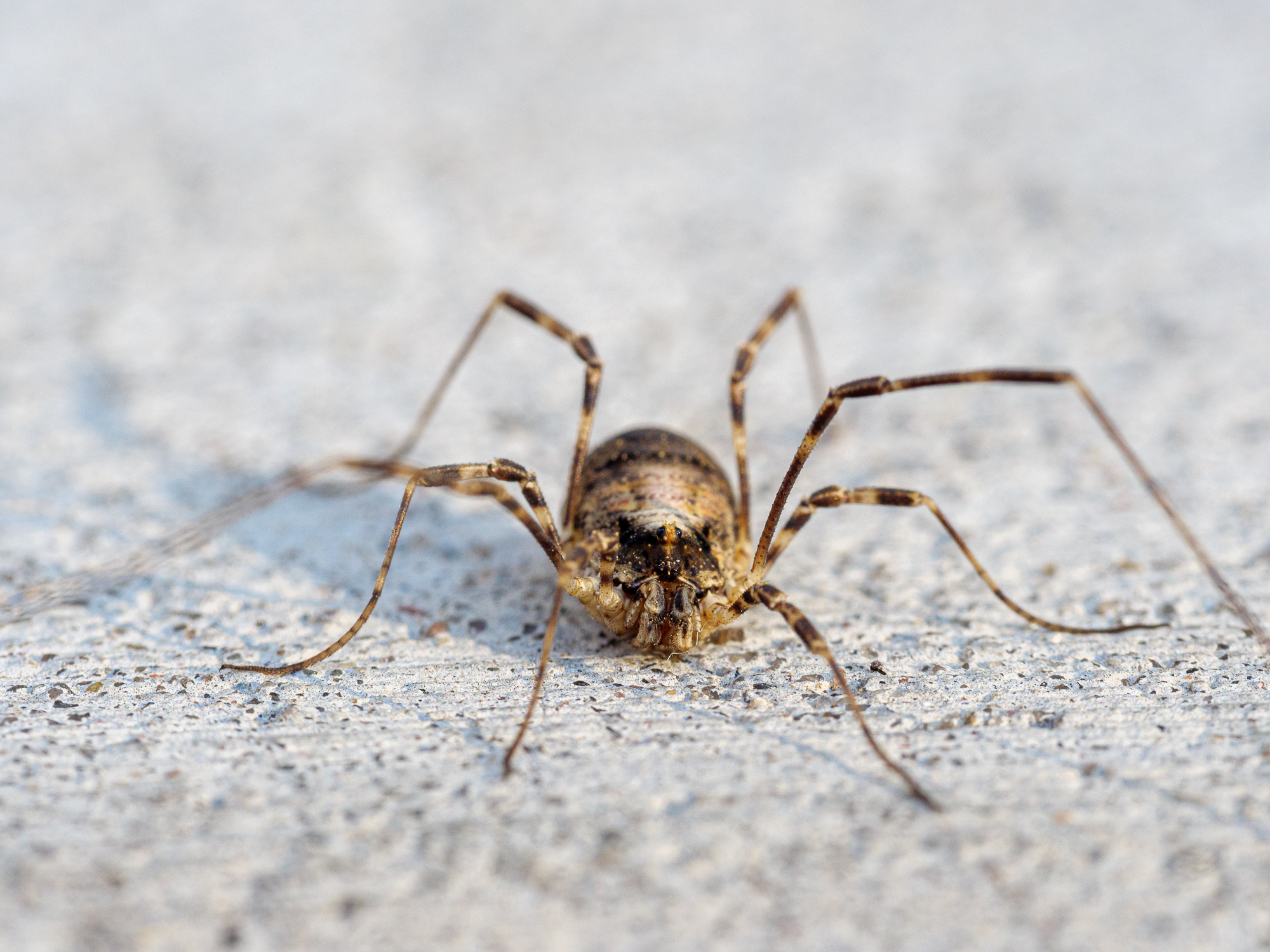
Although it has 8 legs, it isn’t a spider because it has a unified body instead of a head and abdomen arrangement (like a football with legs), but it is an arachnid in the Opiliones order. Occasionally you might see them called Daddy longlegs, but those are slightly different types of Opiliones arachnids. These guys’ legs are much shorter by comparison and they are more substantial – thick thighs! It’s about 1 inch wide with those longest legs.

The touch of the setting sun really made these photos – just look at the little shadows and the pop of the yellows in the legs and body. I overexposed a bit to keep the darks from being too deep. All of these were taken with only natural light and the Panasonic/Leica 45mm f/2.8 macro.
The cement step isn’t the most natural environment, but these guys love leaf litter and disappear instantly. So I decided that keeping it exposed and simply staged was the best way to get some photos. The only other one I have of this species was years ago when I found one on a fern and it miraculously stayed still enough for me to get a shot with the old manual macro lens.

There are over 6600 species worldwide, although thousands more probably exist that we haven’t seen yet. There are even fossil Opiliones dating back some 400 million years. They might look a little strange, but unlike true spiders they don’t have venom and so are absolutely no danger to us wimpy humans. Another thing that makes them distinct from spiders is that they don’t have silk glands or spinnerets with which to make webs or other useful items for catching a meal. As you might imagine, they are ground hunters that chase and ambush prey.
They do have scent glands that are deployed in similar ways to stink bugs – when annoyed, threatened or manhandled, they launch. I don’t know that I’ve ever smelled one and certainly this one didn’t see the need to gas me. Phew. Most of them are omnivorous and eat plant matter, fungi and insects. Some also include animal dung as a choice edible. Ew, but someone has to do it.
They’re pretty social and tolerate each other well. Some species gather in large numbers near water when a protected area is discovered, such as under an overhanging rock or log. Mating is a less dangerous affair than in spiders for the males and many will stay to protect the female for a time before separating. She stores his spermy gift for weeks or months before deciding to fertilize her eggs. In some species she will build a nest for the babies and some species have the most rare of procreation tactics; sole paternal care. In this scenario, a single male harvestman will care for the eggs of a single female, but not all of the babies are his. This not only protects the ones that are, but the ones that aren’t from predators including other (typically female) harvestman. He also cleans the eggs regularly to keep them free from parasites. The babies hatch after about 3 weeks and have to go through 6-8 instars (molting) to reach maturity.
There…more than you probably ever wanted to know about these little 8-legged wonders.

This one eventually moseyed off to the side of the porch and eventually scooted down to the garden, but not before I got to spend time with it and get some photos I really like. Those long shadows in the last shot really knock me out. Hopefully it’s hibernating nicely in the yard somewhere and we can someday meet again.


Leave a comment