The White Cedar Swamp segment of the Ice Age trail was absolutely gorgeous when I first walked it after a dusting of October snow. I’ve been meaning to go back in summer when I can not only walk the swamp, but paddle the small lake that shares a parking lot with the trailhead. Each activity by itself would only take 1-3 hours depending on how much I dawdle, but together it’s a nice day and was it ever.
I was braced for an all-out mosquito attack, but other than in the wooded part leading to the swamp walkway, there weren’t many around. Instead I got all kinds of other buggy company beginning with this beauty –

Eyed Browns and Northern Pearly-eyes are a common species of Brushfooted butterfly and are found all over the state. This one looks to be pristine so it may have just emerged and was trying to find some sun so it could warm up. It’s about 1 1/2 inches across. During the walking portion of my day I saw a few more flitting in the trees and ferns and each one made me smile.
Another bit of nature that was coming up all over were these beauties –

They’re quite striking and I saw some that were about 4 inches high and quite spatulate near the tips. It is a fungi – Clavulinopsis fustiformis or possibly helvola since it wasn’t fruiting in large clumps, but had more scattered bodies in the areas it appeared. I liked these two off in the distance. What I didn’t see at the time was what appears to be a dead spider just to the left of them in a clump of moss. It never moved in the time I took several shots. I suppose it could be alive, but it seems not. Alas.
Here’s a wider view of how the boardwalk and surrounding swamp looks –

Isn’t it amazing? The greens are so intense and varied from a cool bluish green to a warm yellowish green. And the clouds moved and shifted overhead changing the light continuously. It was very dry, however, and so I didn’t hear or see any frogs which was a bummer. There was only standing water at one part at the far end of the walkway, and it wasn’t much.
At the end of the boardwalk section you come back to normal woods and there is a Bracken glade that was full of activity. This red Meadowhawk species was the first to sit for me. Could be a Ruby or a Cherry Meadowhawk, or even a White-faced, but I’m not sure from this angle. I took two images and blended them so the abdomen and the head and shoulders would be in focus.

The lifecycle of many Odonata species is complex and with some help from dragonfly experts, I came to understand that this next one is an immature male and not a female despite looking very much like some from this and other species. The giveaway is that there isn’t an ovipositor visible. I thought it might be the angle, but no – I’d be able to see it pretty much at any angle. This is definitely an Autumn Meadowhawk because the legs are yellow and not black, another identifying characteristic of the species.

While I was getting those shots, I saw these two fly by me and tracked them to this landing spot where I could get the tripod and lens right up close. They were so preoccupied that they didn’t mind my proximity. See what I mean that the female looks similar to the male sitting alone up there? She has black legs though, and also black triangle markings on her sides, so not an Autumn. You can see a little of the male’s white face here so the ID is pretty easy.

This was the highlight of the morning though – a female Scorpionfly! My first time seeing one of these striking insects. If you see one flying, the markings make you think Deer fly, but since it isn’t circling your head looking for a place to strike, you can relax. This one landed in a few different spots before I caught her like this, between Bracken fronds looking for her next meal. You can tell it’s a female because her abdomen is more discreet than the male’s which is bulbous and does curl up and over like a scorpion’s. They are fierce predators, but not interested in us, unlike many flies that will happily take a bite out of you. She was so patient in fact that I could focus manually to make sure she really was nice and sharp. Using a polarizer helped bring up the greens, but still leaves some of the shine on her head, wings and abdomen.

Another fierce predator in the Bracken was this female Bronze jumping spider who had just taken down this relatively massive Crane fly. It isn’t the best picture ever, but really shows the size difference and how capable these little hunters are. Seconds after this shot, she moved under the fronds to enjoy her meal in peace.

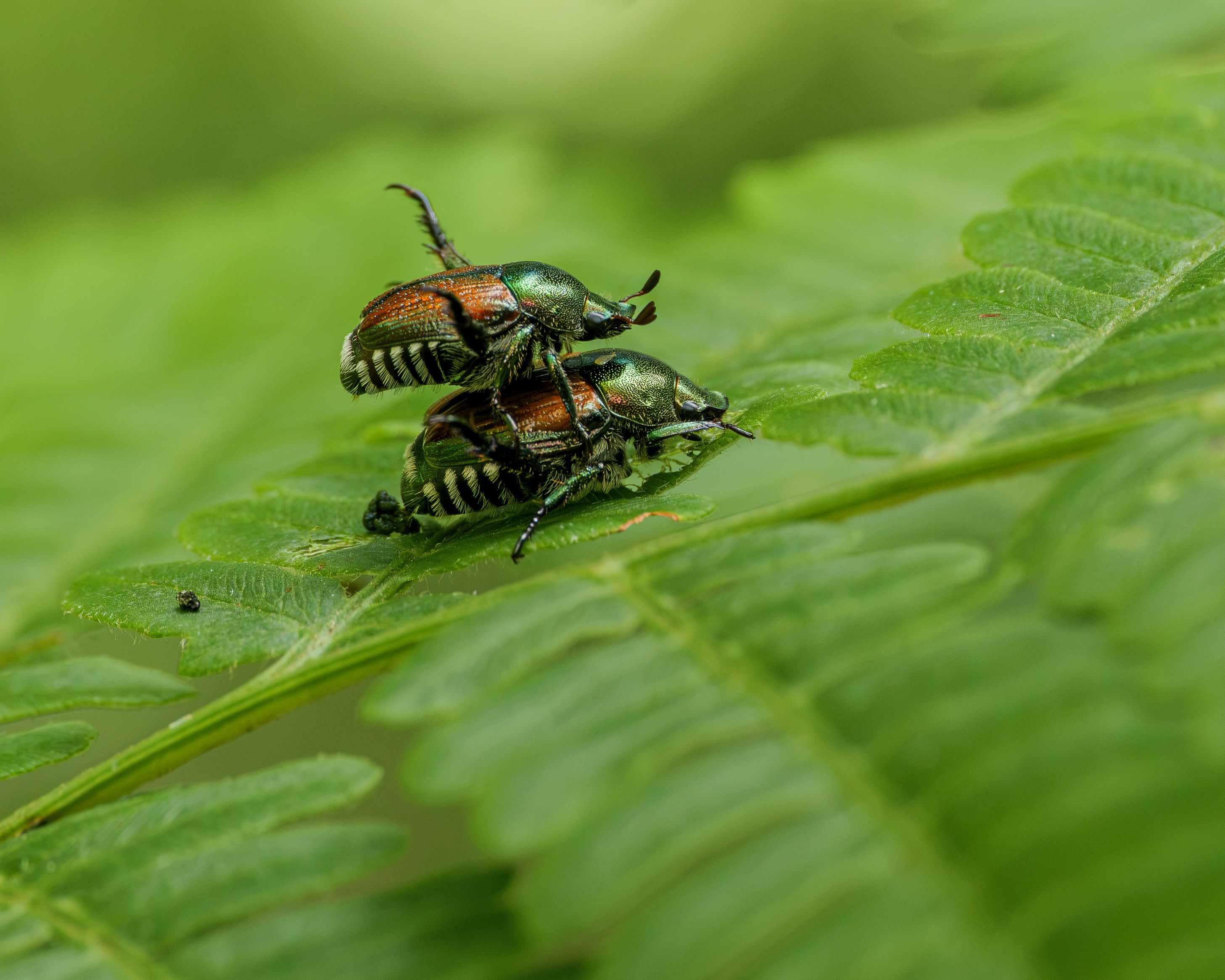
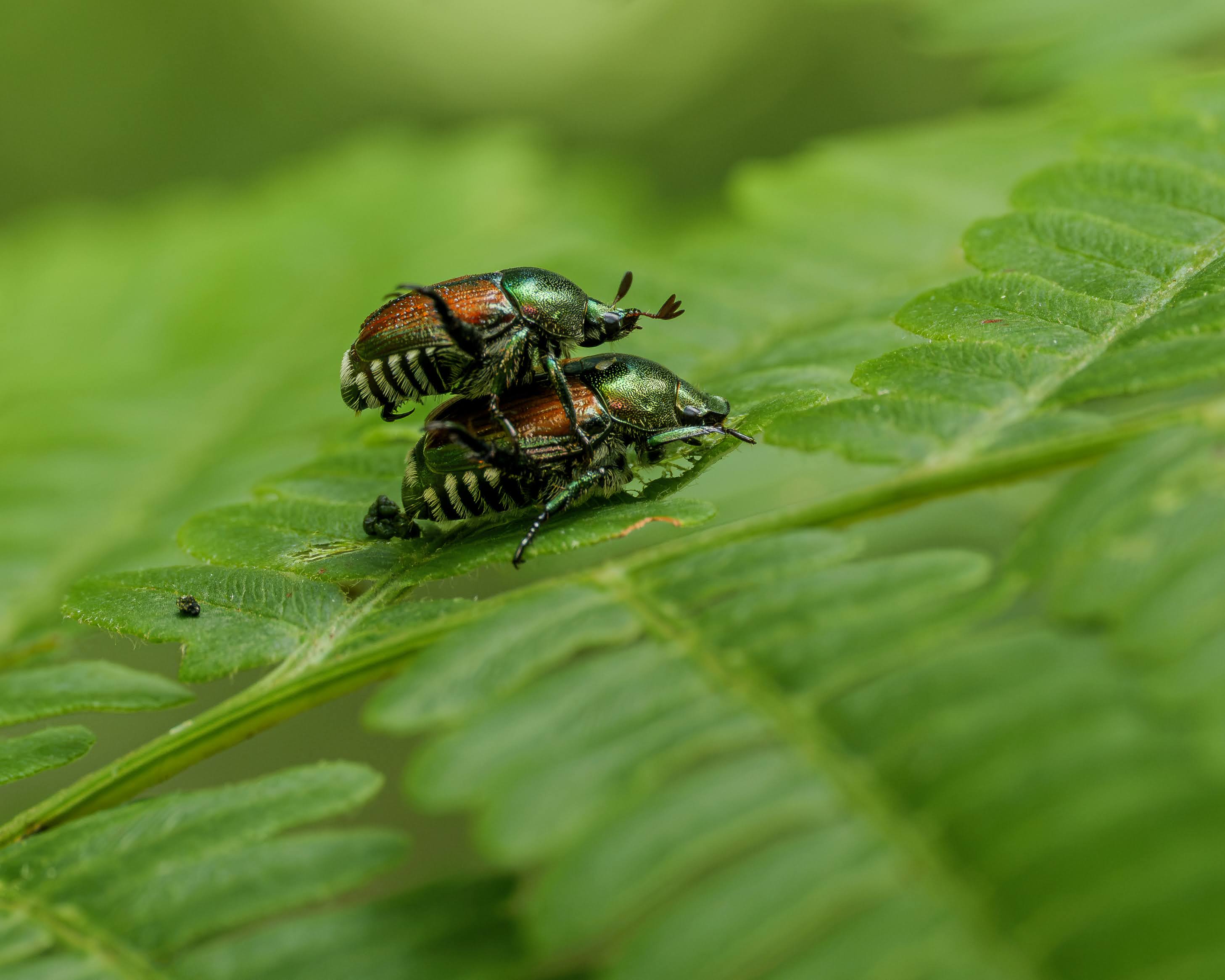
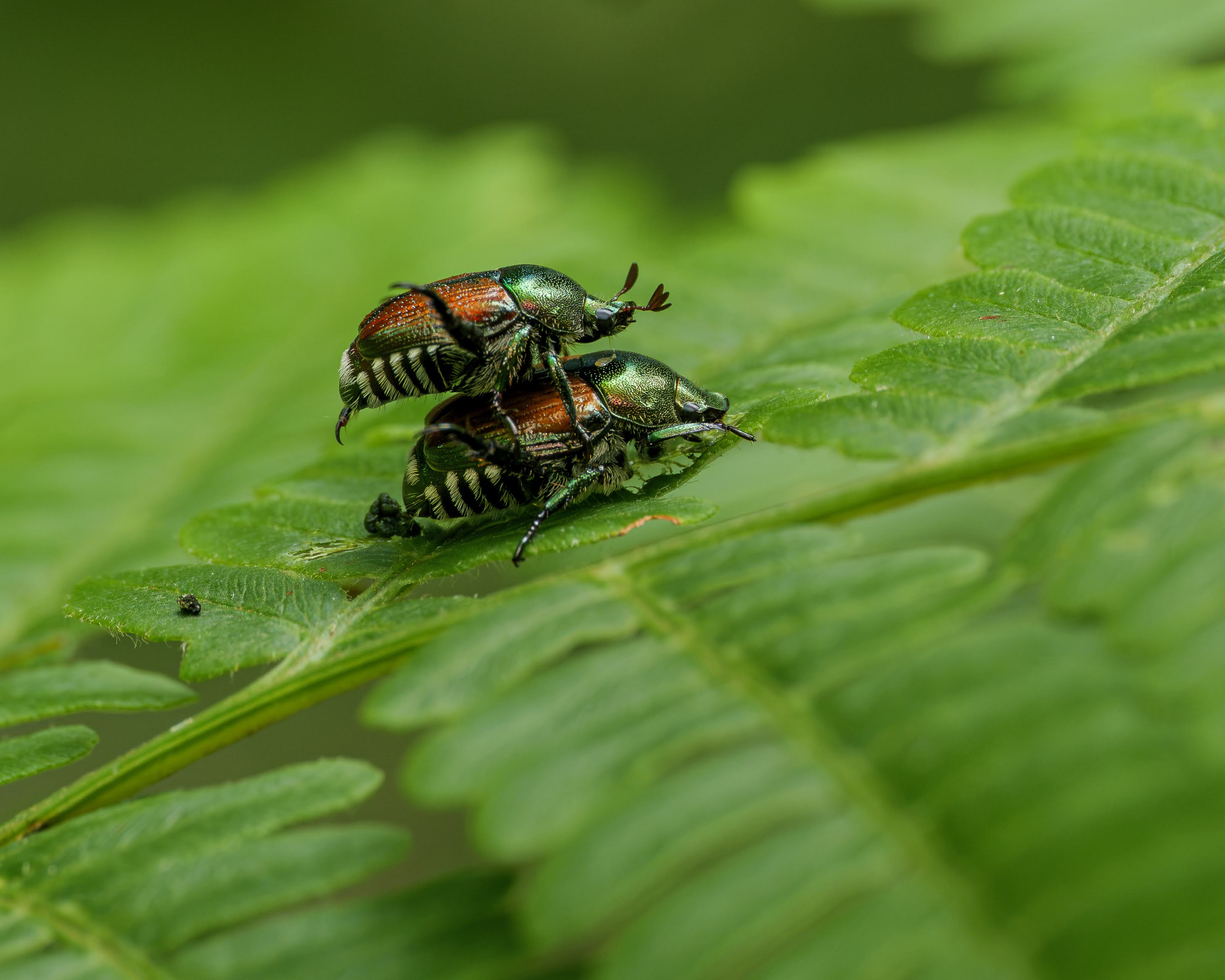
I really need to explore more at the edges of forests and especially in Bracken fern because there was a ton of stuff going on all over. Like these two mating Japanese Beetles. His little spiky appendage looks damn painful. And…is that poop down there? It’s green and seems like it is. Real attractive these two. I do like the fluffy stripey abdomens and the flat antennae, but really hate them in my garden.-
It has been pretty dry, but near a Hemlock swamp, there were some mushrooms to be found, first what is probably an Amanita flavoconia looking all fresh and pretty.

And an otherworldly looking puffball that I did an 11-image stack for –

As I headed back to the parking lot, I took another sweeping view of things –

And noticed these little beauties flying all over. Tried for a photo, but missed, then got luckier with this one that needed a little spot of sun –

It is a White-striped black moth, not a butterfly and it is barely 2 cm across.
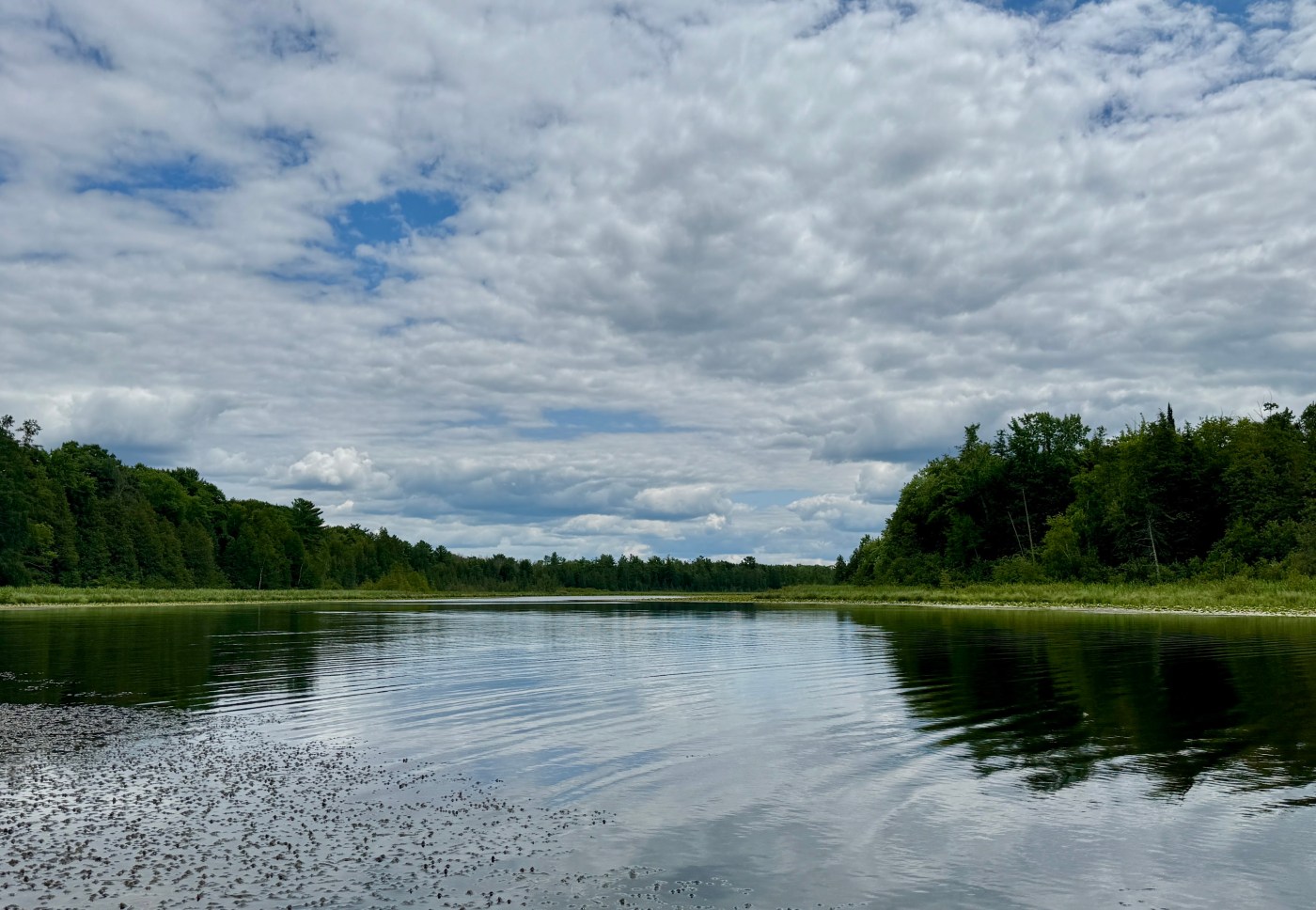
Then it was time to hit the water –
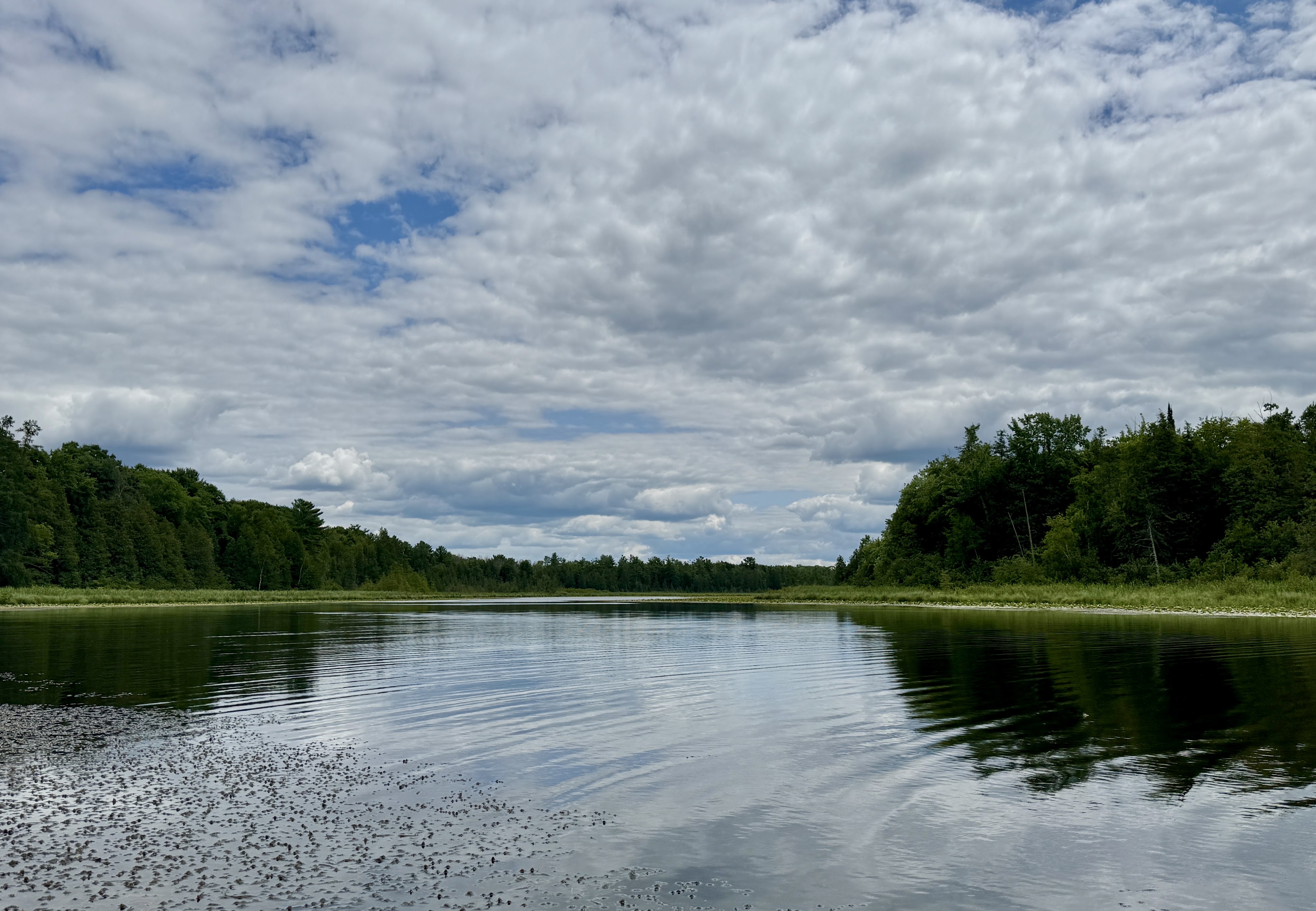
Sorry about the terrible cell phone snap. It was fairly windy and I didn’t have the patience to dig out the G9 with the wide angle lens. It’s only 25 acres or so, but full of dragons and damsels like these two –

She is ovipositing and he stays attached so they fly together to place the eggs over a wide area. I tried to get closer, but they moved off right after I got this picture. At least I got one.
These handsome dudes were much more cooperative –

Blue Dashers are territorial as are most dragonflies, and they like to return to the same perches. Their coloring is really wonderful and contrasts so well with the aging lily pads.

Another species that was around were Eastern Amberwings and they are so tiny and cute it’s hard to believe they are real. At about 1 inch long, they are the only dragonfly that mimics bees/wasps as part of their defense strategy. They are so small their head seems to be all eyes.

I really liked the shadow of their wings that reminded me of stained glass. They are amazingly quick and I had to be patient and just wait for this one to be still for a second or two at a time.

On the other end of the speed spectrum – a totally chill Painted Turtle, the only one I saw oddly enough. Probably because there weren’t a lot of old stumps or logs in the water. This one looks to be on part of a water lily rhizome. Those sometimes break apart and rise to the surface looking like dead prehistoric animals. The first time I saw one I was a little freaked out until I realized what it actually was.

So that’s it for now…do you like the monthly post thing? It feels better for me from a content-perspective as I don’t have to be constantly shooting for a weekly post. Just checking.


Leave a Reply