Having more fun with the new macro lens in the yard. I haven’t yet taken it out anywhere else, but I will eventually. The yard has always been an environment rich in subjects though, so if I spend some time there, something always wants my attention. Like this little jumping spider that was on a lamp in the living room, but got a free lift to the great outdoors where he slowly explored this bit of railing, eventually moving to the siding and going on his merry way. He is tiny at 5mm or even smaller and looks black to the naked eye, but with good lighting you can see why the species is called the Bronze Jumping spider.

Another lesson in ‘Kris should take the camera whenever she walks around the yard’ –
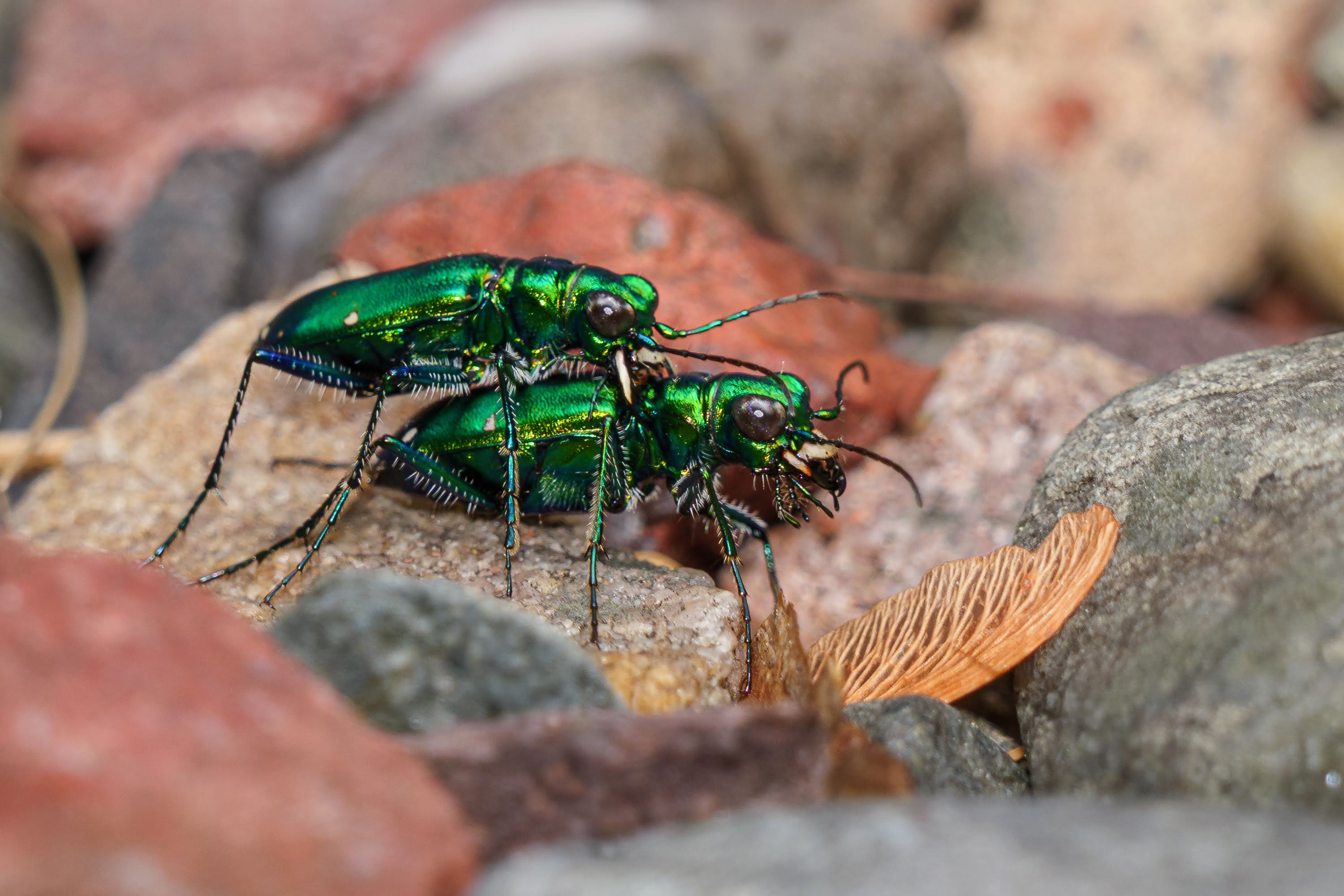
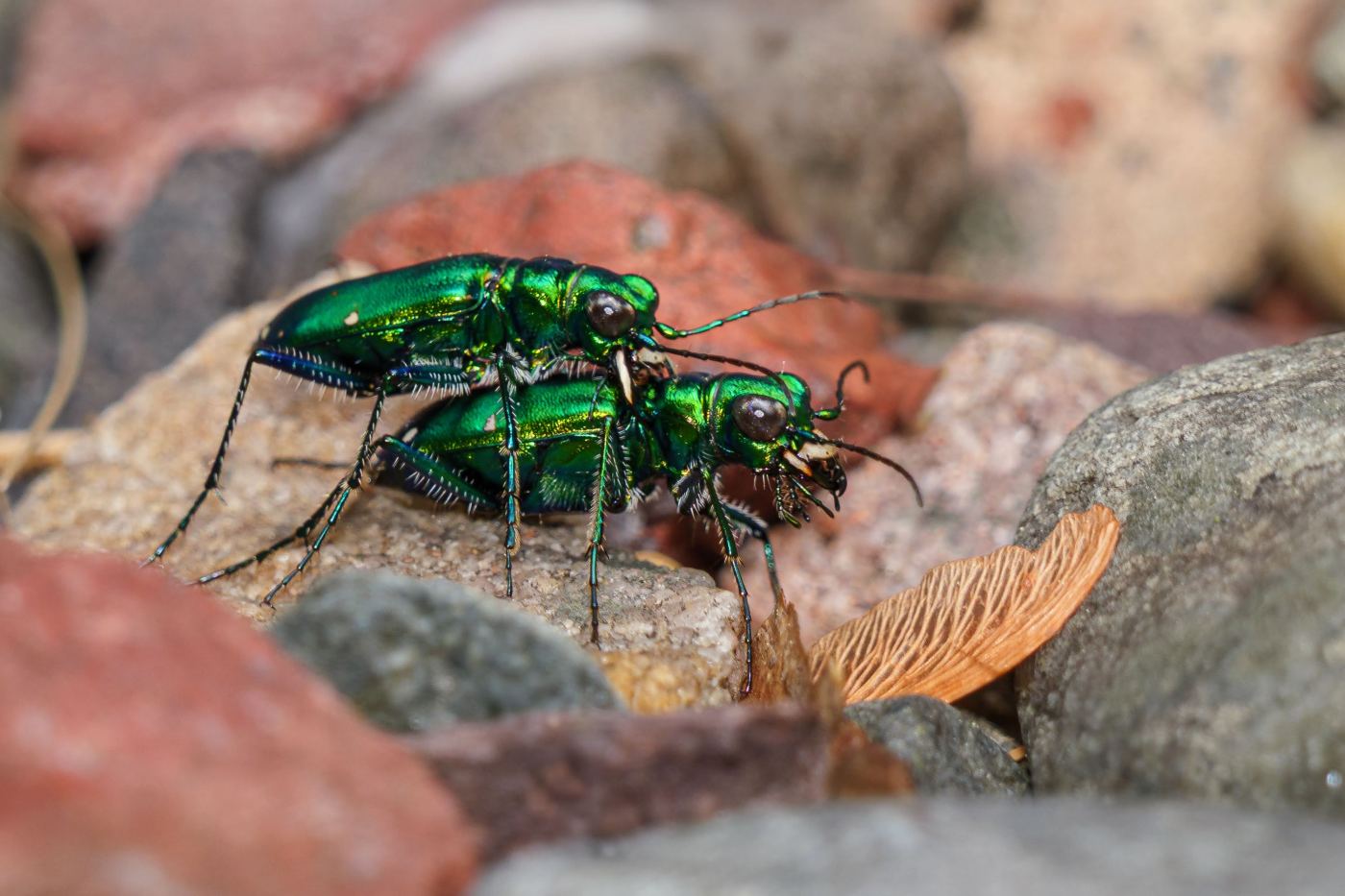
I spotted them (ha, see what I did there, groan) and raced in for the camera with the 100-400 on it figuring that they’d be gone by the time I got back. Surprisingly they were still, uh, at it. They are fairly skittish even when this preoccupied, so I didn’t try the new macro because I needed to be further away. The flash brightened things up nicely. Mainly I use it at less than full power in TTL mode. I flip down the built-in diffusor, plus I use a silicone Mag Mod diffusor on top of that. Dialing in higher ISO or opening the aperture helps refine how much light I get, but I also play with the power setting on the flash itself, ranging from -1 to 0 most of the time.
Hunting for more dragonflies near the dock, I found this Caddisfly that looks as if it just transformed from larvae to adult. Its whole length including the antennae is about an inch and they are very dark, so I had to lift the exposure and shadows quite a bit for this to look good. Should have had the flash with me, but didn’t. Still pleased with how much detail the G9 M2 has in the shadows.

This is what I had come for though – dragonflies emerging. This one was on a concrete block next to the dock and I liked the sort of menacing aspect of the angle and that its wings hadn’t yet started to expand.

Had to go back in for the camera for this one, too. It’s kind of funny that this moth gets that name (scientific name is Zale horrida) since they look really striking and this one didn’t scare me one bit. The naming really shows how the English language has morphed and changed the meaning of horrid. The Latin horrida just means bristly, hairy or scaly, which I suppose describes many a monster and so horrid it is. It was on the foundation of the garage and I hope it didn’t get tangled in any spider webs. It’s about 1 inch wide with the wings spread like this. They feed on nectar and are mostly active at night.

The Salvia in the garden is very popular with bumblebees and I always try for a shot or two of these busy girls –

And their tinier sisters are around as well. Not sure what species this is, but she is very small at about 5mm. There is a bunch of Virginia Waterleaf around and she was clinging to the anthers of this one, just content to be there and covered in pollen.

So that’s it so far. I’m sure as the summer continues into fall, I’ll range farther with the new macro. Especially looking forward to mushroom season!


Hello,
I am looking for a cover photo for the upcoming 2026 Rusk County Plat Book. Do you have any photos of Rusk County that would be suitable? Please contact me if you are interested in discussing. Thank you.
Hi Rebecca –
As a matter of fact I do have some, specifically the Felsenmeer and surrounding area. Will that do? I can email you a link to an album, or you can search this blog and it will come up. If any of those appeal, we can have a chat.
Kris